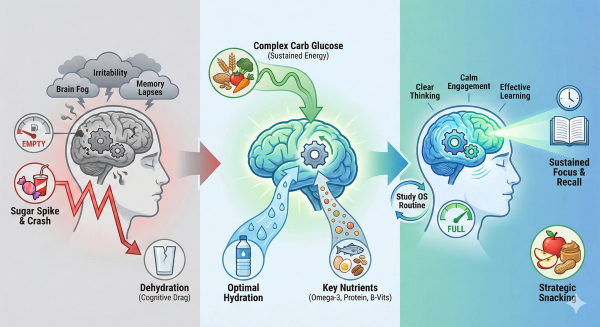
Brain Food: What to Eat for Better Focus and Memory
What you eat directly affects how well you think, focus, and remember—and small changes to your eating habits can supercharge your study sessions.
October 17, 2026
 Manoj Ganapathi
Evidence-based study techniques, learning science insights, and practical tips for students and parents. Build study habits that actually work.
What you eat directly affects how well you think, focus, and remember—and small changes to your eating habits can supercharge your study sessions.
Manoj Ganapathi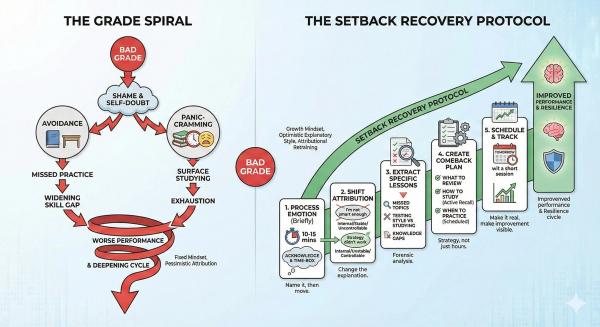
A bad grade isn't the end - it's data. Here's how to break the shame spiral and turn setbacks into setups for growth.
Manoj Ganapathi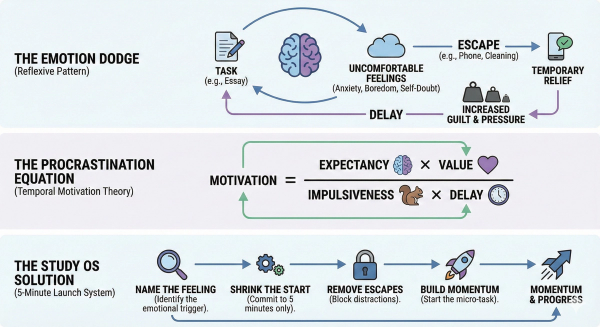
Procrastination isn't a character flaw—it's your brain dodging uncomfortable feelings. Here's the science behind why you delay, and a 5-minute system to break the cycle.
Manoj Ganapathi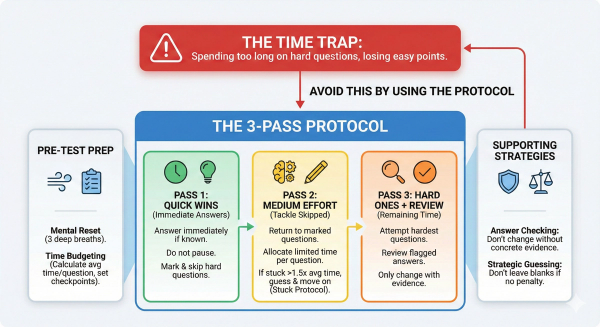
Why studying hard isn't enough if you freeze, rush, or run out of time—and how to turn test-taking itself into a skill.
Manoj Ganapathi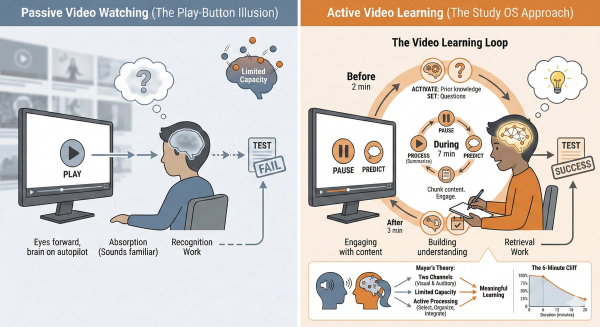
Why hitting play feels like studying but often fails on tests, and how a simple video-watching system builds real understanding that sticks.
Manoj Ganapathi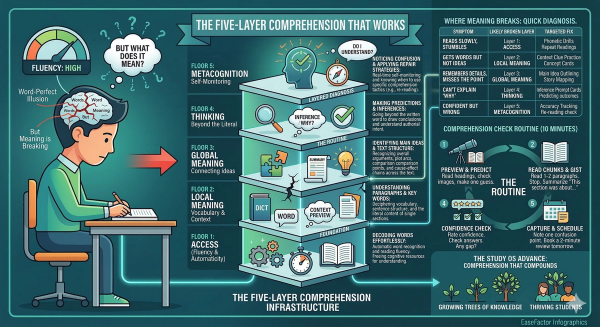
Why reading fluency masks comprehension gaps, how to diagnose where meaning actually breaks, and how to build the five layers of understanding that turn reading into real learning.
Manoj Ganapathi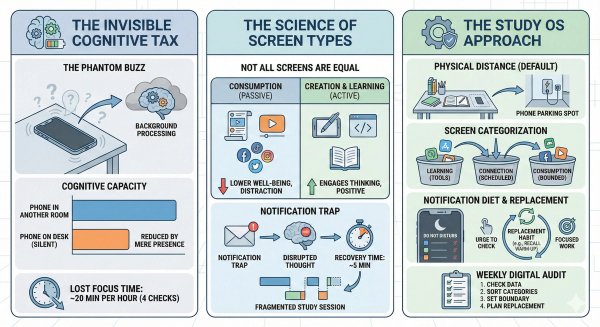
Your phone doesn't just distract you when you check it—it drains your brainpower just by sitting nearby. Here's the science of digital balance and a system for using tech intentionally.
Manoj Ganapathi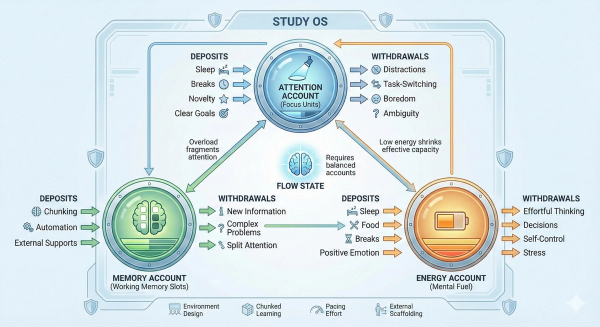
Why smart students run out of mental energy before running out of time - and how to allocate your brain's three limited resources like a pro.
Manoj Ganapathi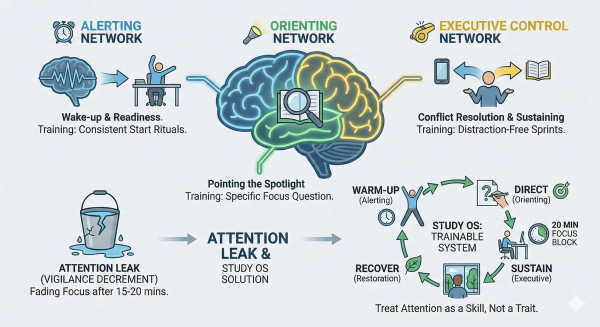
Why focus isn't something you're born with—it's a skill with three trainable systems, and strengthening them changes everything about how you study.
Manoj Ganapathi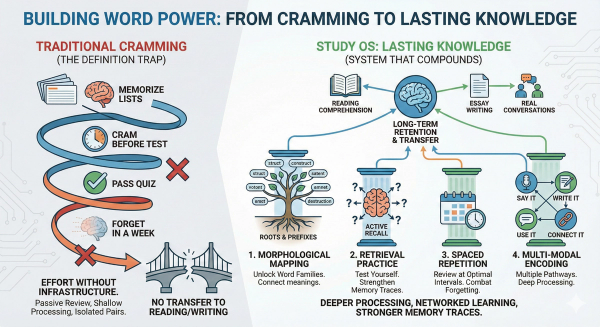
Why memorizing word lists feels productive but fails—and how a Study OS turns vocabulary learning into lasting knowledge.
Manoj Ganapathi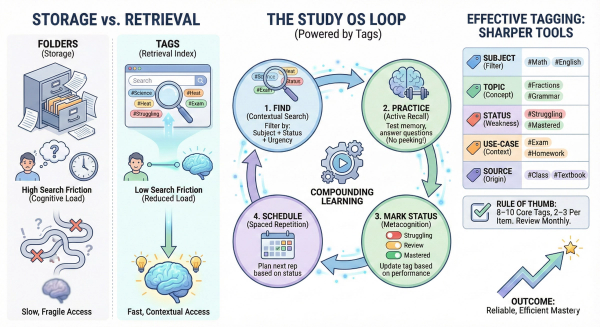
Folders store. Tags retrieve. And retrieval is where learning actually sticks.
Manoj Ganapathi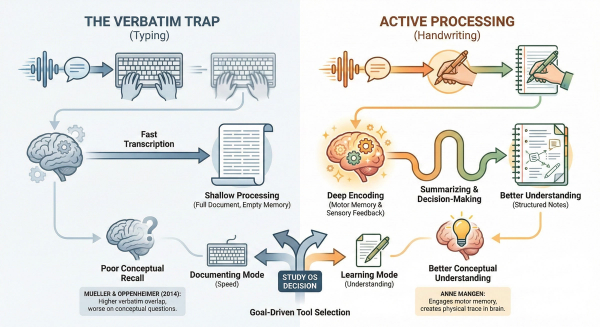
Why typing feels faster but can leave your brain empty—and how a Study OS helps you choose the right tool for each learning task.
Manoj Ganapathi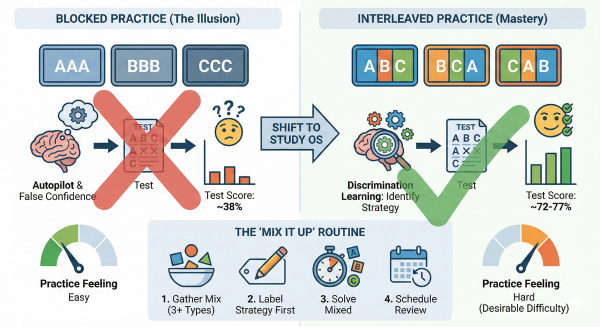
Why practicing the same type of problem over and over feels effective but fails on tests—and how mixing it up builds the skill that matters most.
Manoj Ganapathi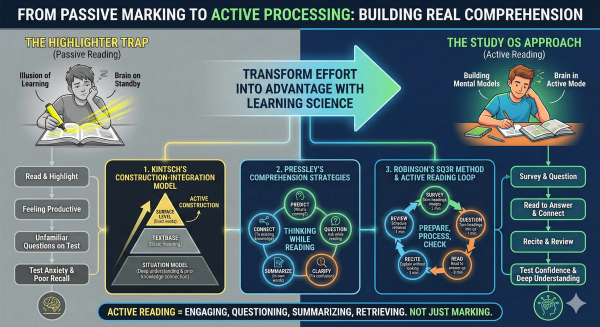
Why highlighting feels productive but fails on tests, and how a simple reading system builds real comprehension that sticks.
Manoj Ganapathi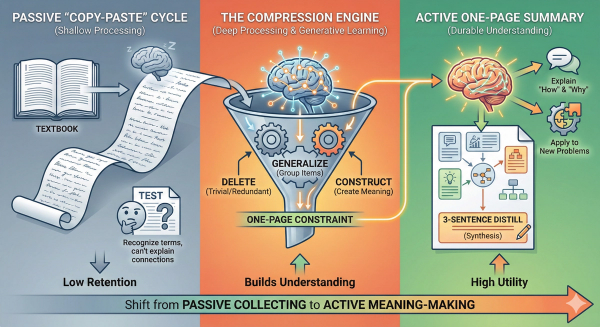
Why copying everything down feels productive but keeps your brain in passenger mode—and how compressing your notes into one page forces the deep processing that actually builds understanding.
Manoj Ganapathi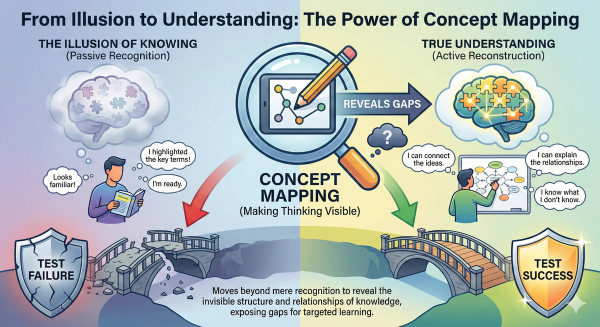
Why drawing connections between ideas exposes hidden gaps—and how a Study OS turns fuzzy understanding into clear, lasting knowledge.
Manoj Ganapathi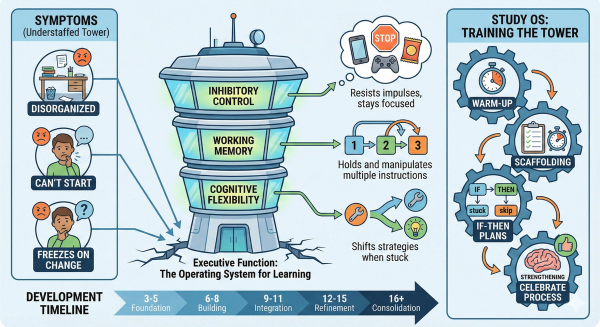
Why smart students still lose homework, forget instructions, and can't start tasks — and how training three core brain skills fixes all of it.
Manoj Ganapathi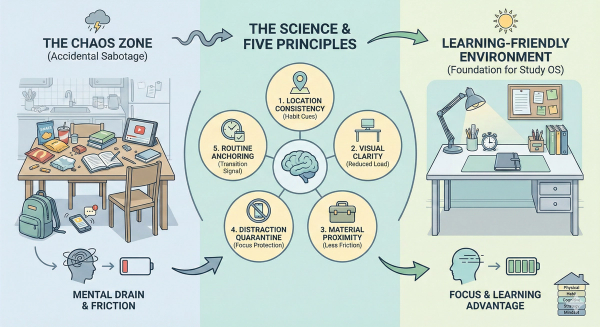
The science of study space design, distraction management, and routines that turn your home into a learning advantage — not a battleground.
Manoj Ganapathi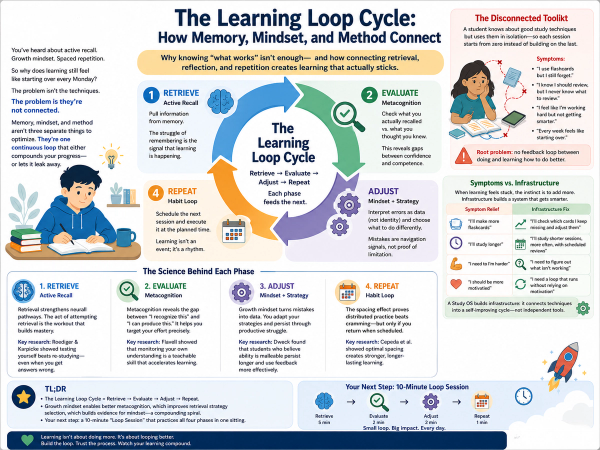
Why isolated study techniques fail and how a cyclical model of Retrieve-Evaluate-Adjust-Repeat creates learning that compounds.
Manoj Ganapathi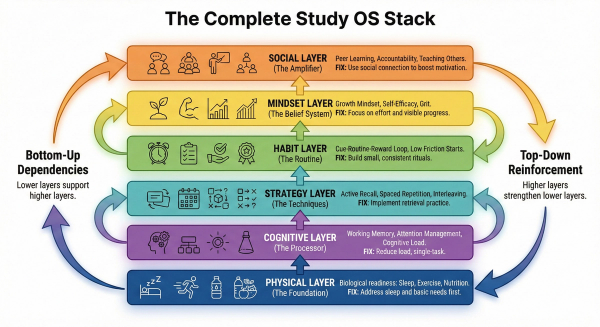
A layered framework showing how physical readiness, cognitive capacity, learning strategies, daily habits, resilient mindset, and social learning work together as one integrated system.
Manoj Ganapathi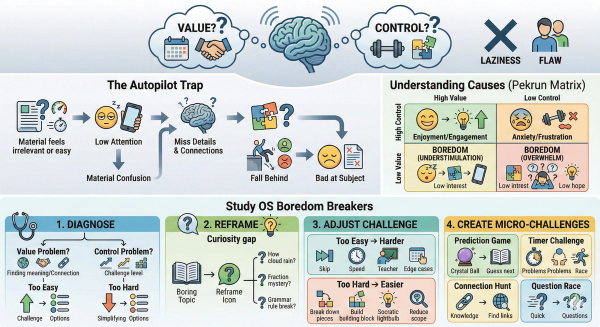
Boredom isn't laziness — it's your brain signaling a value or control problem. Here's the science and the system to break through it.
Manoj Ganapathi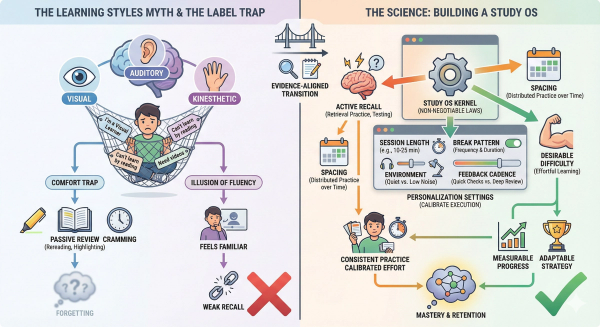
Individual differences are real — but "visual/auditory/kinesthetic" labels don't predict better learning. Here's what to personalize instead, using a Study OS.
Manoj Ganapathi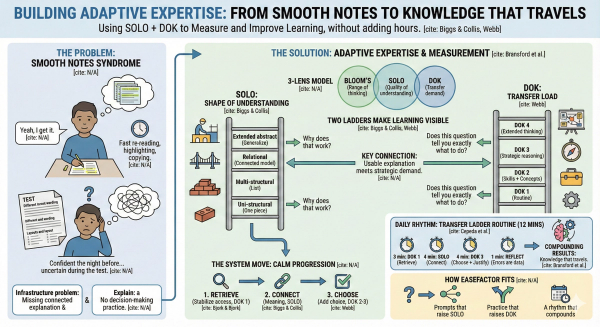
Adaptive expertise, Part 2: how to measure (and then build) "knowledge that travels" using SOLO + DOK—without piling on more hours.
Manoj Ganapathi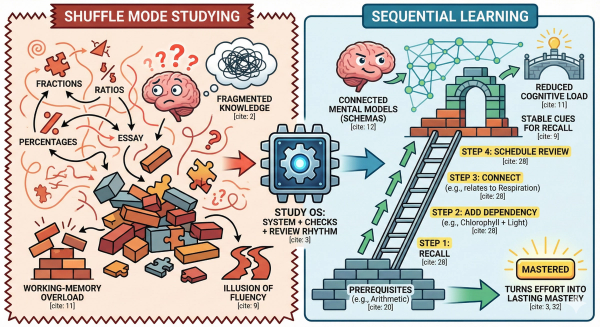
Why structure beats "shuffle mode" studying — and how a Study OS turns effort into lasting mastery. Learn how sequential learning matches how cognition works.
Manoj Ganapathi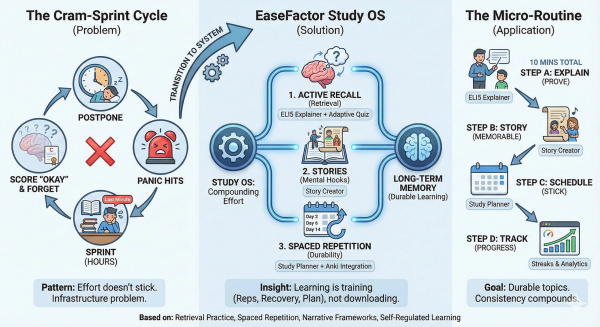
Stop "doing more" and start building a Study OS that makes effort compound—calmly, consistently, and scientifically.
Manoj Ganapathi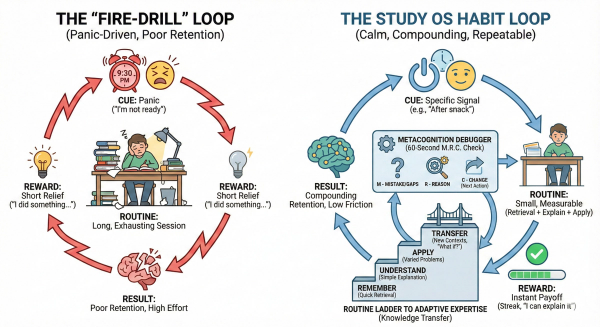
Stop building '9:30 PM fire drills.' Build a calm loop that compounds. Learn the Cue-Routine-Reward-Reflection framework for building study habits that stick.
Manoj Ganapathi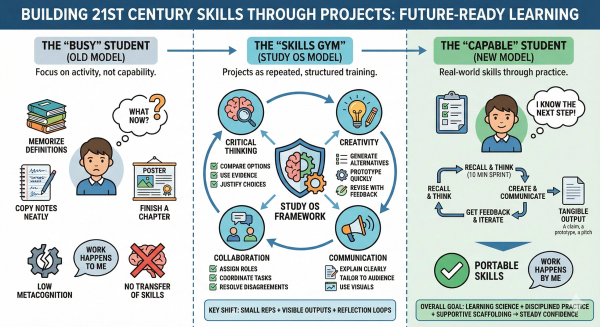
Why 'know the chapter' isn't the same as 'handle the world' — and how projects turn effort into real capability through the 4Cs: Critical Thinking, Creativity, Collaboration, and Communication.
Manoj Ganapathi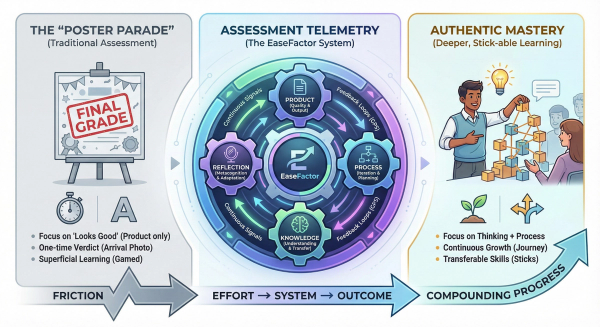
Why authentic assessment is the missing infrastructure layer that makes Project-Based Learning actually stick. Learn how to assess process and thinking, not just the final product.
Manoj Ganapathi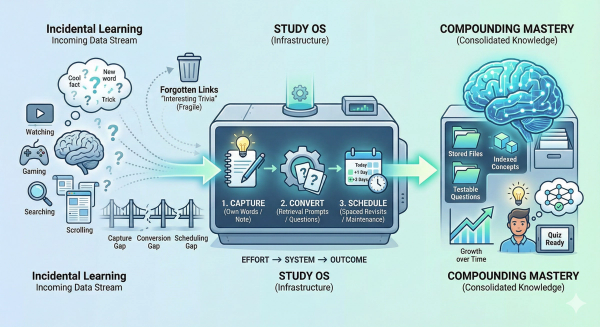
You're learning all the time online—but without a system, most of it evaporates. Here's how to keep the benefits of serendipity while still building mastery through a Study OS approach.
Manoj Ganapathi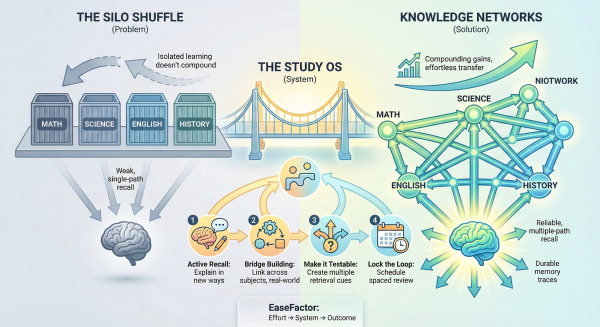
Most forgetting is a connection problem, not an effort problem. Learn how a Study OS builds cross-curricular bridges that make knowledge stick and transfer to real-world situations.
Manoj Ganapathi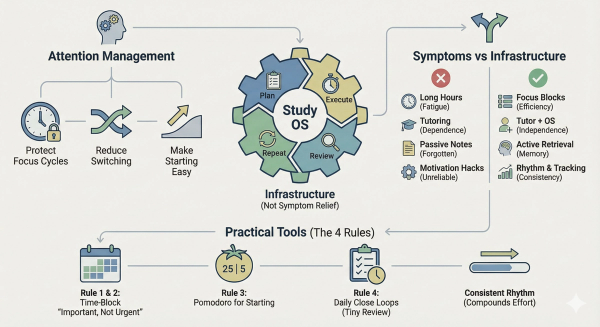
Time management is mostly attention management: protect focus cycles, reduce switching, and make starting easy. Learn how a Study OS transforms effort into lasting improvement.
Manoj Ganapathi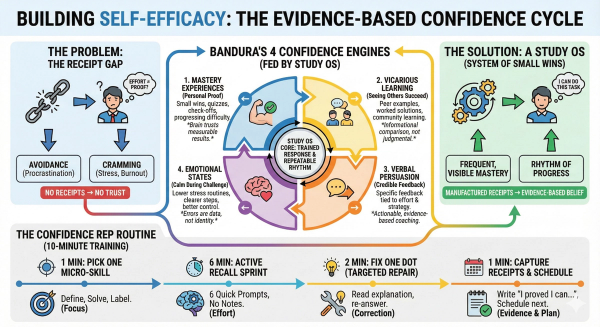
Why confidence that sticks is evidence-based—and how a Study OS turns small wins into long-term academic belief.
Manoj Ganapathi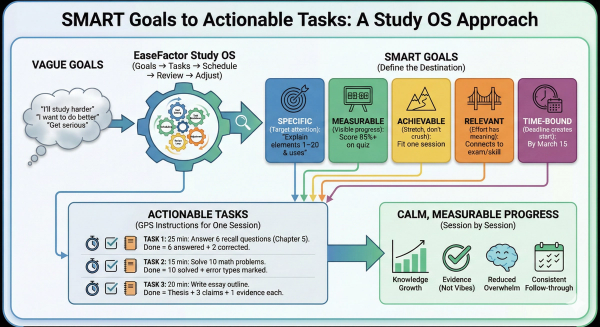
How a Study OS turns "I'll study harder" into calm, measurable progress—session by session. Learn to convert vague intentions into specific, finishable tasks with clear done rules.
Manoj Ganapathi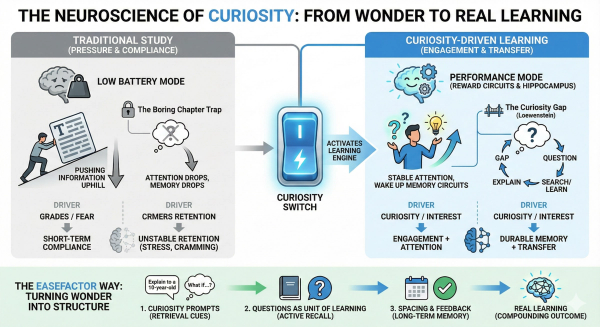
When a topic feels "boring," your brain stops building memories. Curiosity is how you switch the learning engine back on.
Manoj Ganapathi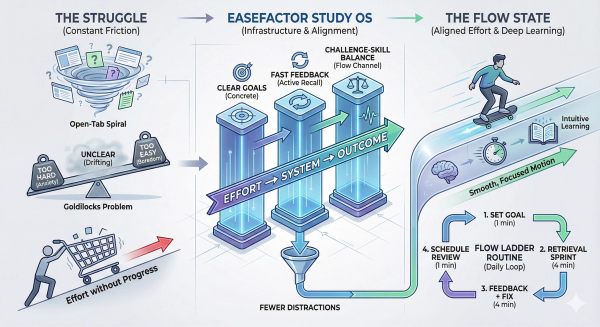
Flow isn't "chill studying." It's focused, challenging work that finally feels like it fits. Learn how to create the conditions where flow becomes repeatable.
Manoj Ganapathi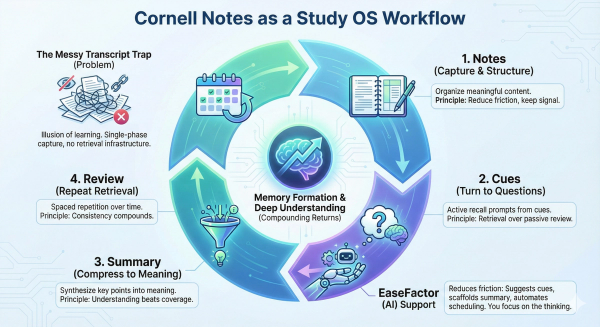
Stop taking records. Start building a retrieval system that compounds—especially when AI does the busywork and you do the thinking. Learn how Cornell Notes work as a mini Study OS per lesson.
Manoj Ganapathi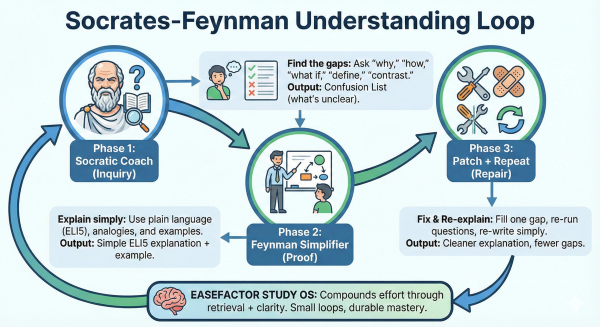
Stop "recognizing the chapter" and start owning the concept with one repeatable Understanding Loop.
Manoj Ganapathi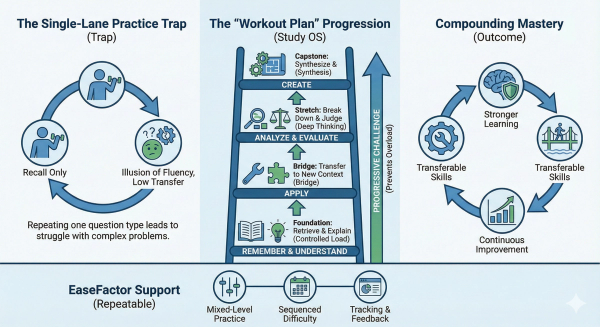
When practice questions only test memory, students feel prepared right up until they meet a problem that requires thinking. Bloom's taxonomy helps you design exercises that build from recall to real-world transfer—without overwhelming learners.
Manoj Ganapathi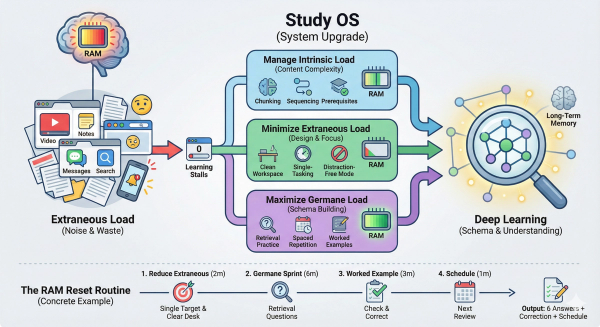
When a student feels overwhelmed, it's often not laziness or low ability—it's an overloaded mental "RAM." A Study OS fixes the system, not just the symptoms.
Manoj Ganapathi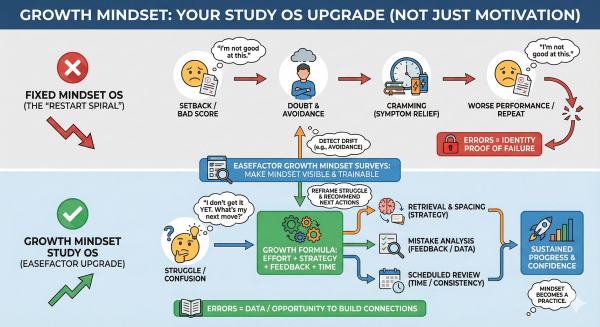
Why 'I'm not good at this' feels true — and how to replace it with a system that turns struggle into progress.
Manoj Ganapathi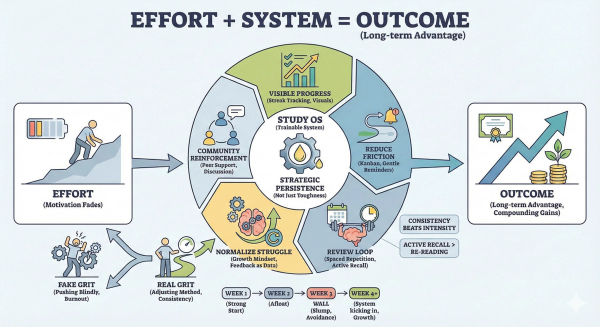
Why students drift after a few hard sessions—and how self-regulation, visible progress, and review routines support persistence.
Manoj Ganapathi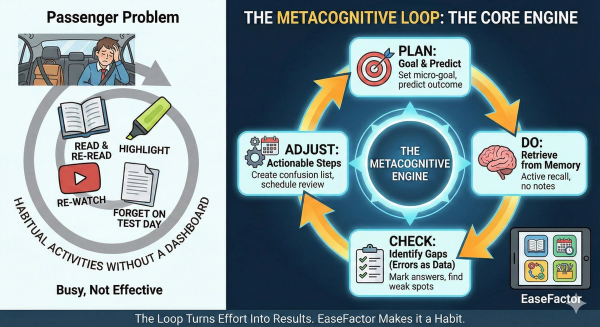
When studying feels busy but marks don't move, the missing piece is often not time—it's self-awareness + self-control. Learn how metacognition transforms effort into results.
Manoj Ganapathi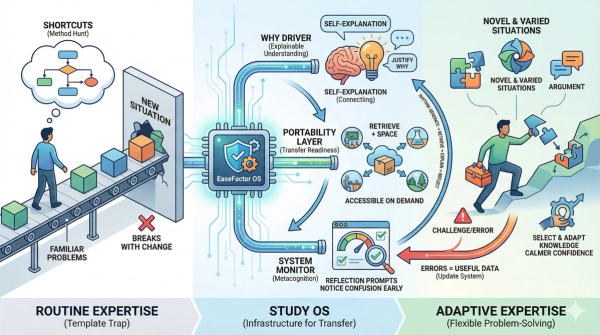
Why 'knowing the chapter' isn't enough—and how a Study OS turns understanding into flexible problem-solving.
Manoj Ganapathi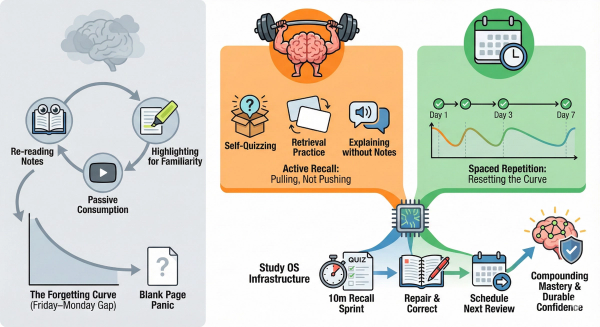
Why re-reading feels productive but fades fast, and how a simple retrieval rhythm builds calm, compounding mastery. Learn how active recall and spaced repetition form a Study OS for lasting knowledge.
Manoj Ganapathi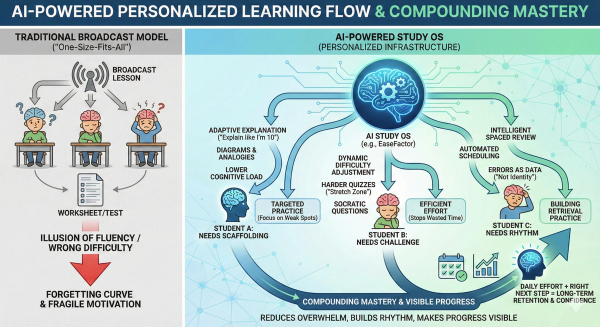
An infographic comparing a "Traditional Broadcast Model" that leads to the forgetting curve through one-size-fits-all instruction, versus an "AI-Powered Study OS" that creates compounding mastery by personalizing explanations, difficulty, and review schedules for individual student needs.
Manoj Ganapathi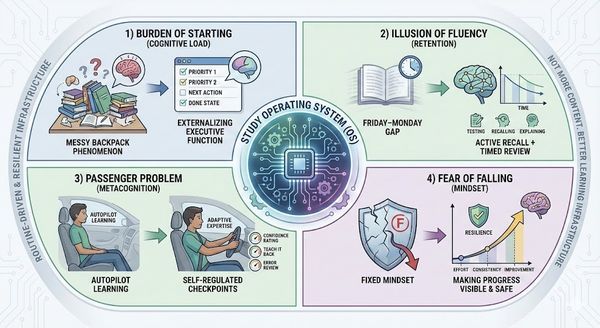
We have more educational resources than ever, yet students are still struggling. The problem isn't content—it's the lack of a Study Operating System that handles habits, routines, and cognitive strategies.
Manoj Ganapathi